
Doctor of
Clinical Nutrition (DCN)
100% Online

Learning Style
100% Online Fully Online CoursesApply By
10/5/26 Free to ApplyCredit Hours
48 Credits Finish in Three YearsTest Free
No GRE Experience-Focused AdmissionDoctor of Clinical Nutrition Overview
The Doctor of Clinical Nutrition at the University of New England is a professional practice doctorate designed for Registered Dietitian Nutritionists seeking to advance in clinical practice, research, leadership, and education. This 48-credit program is delivered fully online and can be completed in 3 to 5 years, with flexible full- or part-time options built for working professionals.
UNE’s direct-entry approach allows qualified applicants to begin without a minimum work experience requirement. Applicants must hold a master’s degree and the Registered Dietitian Nutritionist (RDN) credential, but can move forward without delaying their academic progression.
The curriculum integrates evidence-based nutrition practice, leadership development, research methods, and educational theory. Students complete practice-based research throughout the program and may choose a leadership focus in higher education, healthcare management, or community health to align with their goals.
The program culminates in a 320-hour advanced practice residency and a doctoral research project. Graduates are prepared to lead, collaborate across healthcare teams, and contribute to innovation in nutrition and dietetics practice.
Doctor of Clinical Nutrition Focus Areas
Leadership in Higher Education Administration
Designed for current or aspiring higher education professionals, this focus prepares graduates to apply evidence-based administrative practices and effective pedagogical and andragogical approaches to undergraduate and graduate programs within academic institutions.
Leadership in Healthcare and Clinical Management
Intended for current or aspiring healthcare leaders, this focus equips graduates with evidence-based management practices to lead clinical teams, guide personnel, and support effective, high-quality service delivery in healthcare and clinical settings.
Leadership in Community Health Services
Designed for those leading or aspiring to lead community health initiatives, this focus prepares graduates to implement evidence-based practices and develop, deliver, and evaluate targeted community health education and service programs.
Is UNE Online’s DCN Program Accredited?

We are proud to hold NECHE (New England Commission on Higher Education) accreditation. NECHE Accreditation ensures a high level of academic quality and public accountability for the education being provided.
Best Colleges: National, U.S. News & World Report 2026
Best Colleges Princeton Review 2026
What are the Admissions Requirements?
At UNE Online, we take a holistic approach to reviewing applications for the Doctor of Clinical Nutrition program. No GRE is required, and applicants are welcomed from a range of academic backgrounds. Successful students demonstrate intellectual curiosity, perseverance, and the ability to manage multiple priorities in a rigorous academic environment. Applications are reviewed comprehensively, considering prior academic performance, preparation in the sciences, and submitted materials.
Admission Requirements
Credentials from the Commission on Dietetic Registration (For U.S. Applicants)
OR equivalent credential that meets U.S. Standards by the Commission on Dietetic Registration (For International Applicants).
Earned from a regionally accredited institution (or international equivalent).
Students close to completing their master’s degree may apply for conditional acceptance pending receipt of a final transcript.
Applicants with a GPA lower than 3.0 may be considered for admission with a statement of the rationale for the GPA and plans for future success.
Application Materials
Complete to fast and free online application.
Submit your resume detailing past work and education experience.
Question 1 (Required): What inspired you to pursue graduate study in your chosen field? What strengths or assets will support your success in this program? What areas of personal or professional growth do you hope to address and achieve through this program? Describe how your intended focus area or topical area(s) of interest align with your career goals and briefly describe the types of sites and/or mentors you have considered that could support you in your advanced practice residency. (500-700 words total)
Question 2 (Optional): If your GPA is below 3.0, we invite you to share more about your academic journey. What challenges have you faced, what have you learned from those experiences, and how are you preparing to succeed?
Submit your official transcript(s) showing conferral of a master’s degree.
Submit a copy of Commission on Dietetic Registration (CDR) Registered Dietitian Nutritionist (RDN) credentialing card with number or equivalent credential verification that meets U.S. standards by CDR (for international applicants).
Connect with UNE Online’s Director of DCN
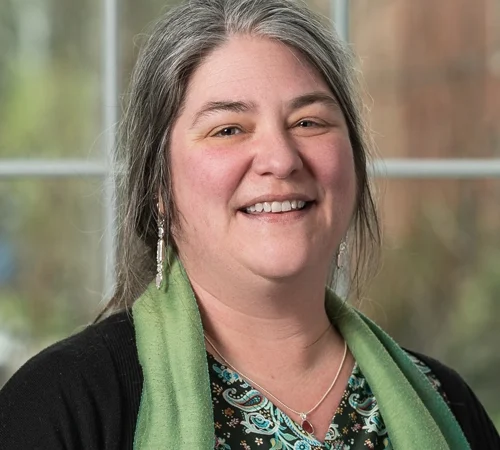
Have questions about the program or want to explore how the DCN aligns with your professional goals? Schedule a one-on-one conversation with DCN Director, Elizabeth Dodge, to learn more about the curriculum, admissions, or your potential pathway through the program. You can also email nutrition@une.edu with questions or for additional information.
What is the Curriculum?
The Doctor of Clinical Nutrition curriculum emphasizes advanced clinical practice, leadership, and applied research. Coursework is delivered 100% online through structured, instructor-led sessions and integrates practice-based research throughout the program. Students complete an advanced practice residency aligned with their leadership focus area and career goals, culminating in a doctoral research project and publication-ready manuscript.
Interested in trying a Nutrition course? Check out our single-registration courses.
Courses
DCN 801 | 3 credit hours
Foundational knowledge and skills in practice-based nutrition research methods will be established. Topics include ethical research practices, research design, data quality and integrity, choosing the correct analytical tests, and data analysis. Students will generate an initial research question, identify a pre-existing data set for secondary analysis, and conduct post-hoc analysis to ensure the dataset will address the research question in preparation for their DCN 810 research project.
DCN 806 | 3 credit hours
Advanced concepts and techniques in nutrition assessment and therapeutic nutrition intervention for complex medical conditions and disease states will be examined. Topics in nutrition assessment include anthropometry and body composition, biochemical indices, metabolic prediction, nutrition-focused physical examination, and malnutrition screening and assessment. Topics in nutrition therapy focus on current and emerging interventions related to macronutrient, micronutrient, and other dietary modification. Students demonstrate advanced practice skills in clinical assessment, interpretation, and decision-making and justify clinical decisions and nutrition services through application of evidence-based guidelines and current scholarly literature.
DCN 810 | 3 credit hours
Advanced skills in scholarly inquiry, critical evaluation of professional literature, doctoral-level research, and writing will be developed. Students conduct a secondary data analysis, comprehensive literature review, and author a manuscript. Nutrition and health profession research methodologies including quantitative and qualitative analysis and mixed methods approaches are emphasized. Students will conceptualize and produce a proposal for their doctoral research project.
DCN 816 | 3 credit hours
Key concepts and applications of pharmaceutical and nutraceutical products used in traditional and complementary medicine will be examined through a nutritional biochemistry and human metabolism framework. Topics include pharmacokinetics, pharmacodynamics, indications, contraindications, safety, interactions, and administration. Emphasis is placed on the intersection of pharmacology and nutrition therapy in disease management. Students engage in evidence analysis and apply theory to practice through case studies.
DCN 820 | 3 credit hours
Advanced theory and strategies in healthcare counseling, coaching, and communication to support health literacy, behavior change, and health outcomes will be explored. Emphasis will be placed on culturally appropriate communication techniques and approaches, including motivational interviewing, across a variety of practice settings and patient populations. Students demonstrate their advanced counseling and coaching skills through role-play and simulations.
DCN 825 | 3 credit hours
Contemporary theories in leadership will be explored to equip students with advanced skills in situational awareness, deliberate and ethical decision-making, innovation, and change management to adaptively navigate complex and dynamic organizational landscapes. Students conduct psychometric assessment of their leadership skills, emotional intelligence, and creative potential to inform their development as an adaptive leader. Students complete an action-based project that demonstrates adaptive leadership in health care settings and practice.
DCN 830 | 3 credit hours
Emerging trends and issues in advanced practice and scholarship will be explored in preparation for the student’s advanced practice residency and doctoral research project. Students generate and defend their doctoral research project proposal.
DCN 835 | 3 credit hours
Challenges and opportunities in contemporary healthcare services, delivery, and management within the context of the broader healthcare ecosystem will be explored. Topics include healthcare policy, technology, financial models, economic and social impact, stakeholder interests, legal and ethical considerations, and key performance indicators. Students engage in advocacy initiatives and propose transformative approaches and collaborative solutions to advance practice, patient care, and health outcomes within the national or global healthcare landscape.
DCN 840 | 3 credit hours
Attributes, behaviors, and practices of proactive, agile, socially responsible, and inclusive leadership will be examined to equip students with advanced skills in strategic planning, systems thinking, team-building, crisis management, and conflict resolution. Students complete an action-based quality improvement project that demonstrates responsive leadership in professional practice.
DCN 846 | 3 credit hours
National and global food access, food sovereignty, social justice, and food advocacy initiatives will be examined with an emphasis on the availability, needs, and provision of food-based nutrition services and their impact on nutrition-related health outcomes. Students will propose and defend a grant proposal for governance, advocacy, and direct services solutions to a food justice issue.
DCN 850 | 3 credit hours
Current trends and issues in health professions leadership will be examined. Emphasis is placed on leadership development and growth mindset, evidence-based practice, interprofessional practice, cultural humility and health equity, technology in practice, and data-driven decision-making. Students translate theory to practice based on their program focus area.
DCN 856 | 1 credit hour
Focused growth and application of advanced nutrition theory and skills, clinical reasoning, decision-making, and scientific inquiry are accomplished through completion of 160 hours of experiential learning. Students are mentored by one or more advanced practice professionals in a professional practice environment. Students demonstrate competence in advanced nutrition practice through delivery of person-centered nutrition care within a chosen area of specialized nutrition practice.
DCN 866 | 1 credit hour
Advanced practice-based research methods are employed through student conduct of their approved doctoral research project. Students hone their skills in scholarly inquiry by executing their research study. The study (up through all data collection) for the doctoral research project should be completed by the end of this term unless prior permission is received.
DCN 870 | 3 credit hours
Doctoral-level practice-based research methods are implemented through student conduct of their approved doctoral research project. Students directly engage in scholarly inquiry by preparing, analyzing, and interpreting data to answer a novel question related to nutrition practice. Students synthesize research findings to draw valid conclusions and produce nutrition practice recommendations. A draft of the doctoral research project will be completed.
DCN 876 | 1 credit hour
Continuation of the nutrition residency experience through furthered growth and application of advanced nutrition theory and skills, clinical reasoning, decision-making, and scientific inquiry in a chosen area of specialized nutrition practice. Students complete their remaining 160 hours of experiential learning through mentorship by one or more advanced practice professionals in a professional practice environment. Students demonstrate competence in advanced nutrition practice through delivery of person-centered nutrition care culminating in comprehensive assessment and documentation of each student’s personal and professional Scope of Dietetics Practice.
DCN 880 | 3 credit hours
This 8-week course is designed to help graduate, doctoral and postdoctoral students revise and format an existing piece of scholarly writing to meet publication expectations. Students are expected to have a dissertation, thesis, research or capstone manuscript to revise into an article manuscript. This course will prepare students to work through journal selection, authorship issues, and the preparation of manuscripts for publication in peer-reviewed journals.
The class is intended for graduate and doctoral students who have completed a graduate project through primary or secondary data collection and are engaged in the analyses of their results – typically beyond the midway mark of their project; the introduction, background, methods, results and at least part of the discussion should be complete.
At the end of the term, students enrolled will have completed a manuscript that is ready for submission to a peer-reviewed academic journal and are expected to provide proof of submission.
What are the Career Outcomes for DCN Graduates?
Graduates of the Doctor of Clinical Nutrition (DCN) are prepared for advanced professional roles that extend beyond traditional nutrition practice into leadership, research, and academic influence. As a professional practice doctorate, the DCN cultivates expertise in evidence-based nutrition services, adaptive leadership, and scientific inquiry, positioning graduates to contribute meaningfully to clinical practice, health systems, community programming, and higher education administration. UNE’s emphasis on practice-based research and manuscript development mirrors outcomes seen in similar DCN programs, where alumni frequently publish in peer-reviewed journals, present at national forums, and hold leadership roles in professional organizations.
DCN-prepared professionals are well suited for advanced clinical roles (such as chronic disease prevention and complex nutrition care), leadership positions in healthcare and community health services, research and outcomes measurement, and academic appointments. The depth of research training also enables graduates to influence practice standards, health education, policy discussions, and interdisciplinary collaboration across settings where nutrition impacts health outcomes.

Job Trajectory
Graduates of the Doctor of Clinical Nutrition are prepared for advanced, leadership-oriented roles that extend beyond traditional nutrition practice. These sample career paths reflect doctoral-level responsibilities in clinical leadership, education, research, and systems-based health care.
- Clinical Nutrition Director / Manager
- 6% growth from 2024–2034
- Advanced Practice Clinical Dietitian
- 6% growth from 2024–2034
- Faculty or Academic Program Leader (Nutrition & Dietetics)
- 6% growth from 2024–2034
Graduates pursue advanced roles such as clinical nutrition leadership, faculty and academic administration, applied research, and community health program leadership. These roles fall within broader U.S. Bureau of Labor Statistics-tracked occupations for dietitians and nutritionists, which are projected to grow about 6% from 2024–2034.
Important Dates
Apply By
10/5/26Application Deadline
Classes Start
10/28/26Start Classes Soon
Next Application Deadline
12/21/26Explore the Program
What are the Tuition and Fees?
Tuition for the University of New England Online Doctor of Clinical Nutrition is competitive among other schools at $895/credit.* Because all of our courses are delivered 100% online, you will not incur the cost of traveling to campus or relocating to complete your degree.
*Tuition and fees are subject to change and do not include the cost of books or other materials. Please contact Student Financial Services to learn more
Free Application
General Services Fee (per semester): $345
Registration Fee (non-matriculated students per semester): $45
Malpractice Insurance Fee (annual fee during DCN 856, DCN 866, DCN876): $50
Lab Fee (per course – DCN 856, DCN 866, DCN 876): $260
Is Financial Aid Available for UNE Online’s DCN program?
We are here to help you finance your online education so that you can earn a degree that’s convenient, affordable, and still allows you to balance all of the other important aspects of your life. Several options exist to help you meet your educational costs. Student Financial Services has also created a step-by-step process for applying for aid.
Why Choose UNE?
Flexible Online Formats
Flexible online formats designed for working professionals, career changers, and lifelong learners balancing goals, schedules, and responsibilities confidently.
Applied Learning
Applied, real-world learning focused on practical skills, clear outcomes, and immediate relevance across diverse professional contexts and industries.
Faculty
Expert instructors, supportive advising, and intentional design ensure learners gain confidence, momentum, and meaningful progress through every program.

“This is not my first experience with an online learning platform, and I feel UNE has created a very comfortable distance learning space. All staff are very professional, kind, and quick to respond to any of my questions. Their guidance has been instrumental in my understanding of the coursework.”
—Saoirse, Nutrition Student, ’28
Who’s Part of the DCN Faculty?


















Frequently Asked Questions
Students can complete the program full time in 3 years or part-time in 5 years. Students must complete the entire DCN degree within seven years.
Yes, an individual may apply to be conditionally accepted into the DCN pending successful completion of a master’s degree.
A minimum number of years of experience as a RDN is not required. Students must demonstrate proficiency in dietetics practice, professionalism, critical thinking, and communication skills as determined through E-portfolio review.
Students may apply to transfer up to three (3) courses, or a maximum of nine (9) credits. Transfer credit must be classified as graduate level, have been taken within five (5) years of program application, have been completed with a grade of “B” or better, and be equivalent to one of the required program courses or an elective course that meets the goals of the student’s education. Transfer credits are awarded at the discretion of the Program Director.
The UNE Online DCN is designed for RDNs who desire to advance in their practice competence and overall career trajectory from proficient practice to expert practice and assume positions of leadership in academia or healthcare.
The UNE Online DCN is an intensive, rigorous program that emphasizes evaluation and application of evidence-based research to professional practice. Prospective students should demonstrate strong academic aptitude, critical thinking, clinical reasoning, and proficiency in the standards of RDN practice and performance. They should also demonstrate strong interest in nutrition research and potential for professional leadership.
The UNE DCN program is designed for working professionals. Prospective students should evaluate their schedules, professional and personal responsibilities, academic aptitude, and time management skills to confirm they have adequate time to devote to program coursework, research, and advanced practice residency requirements.
Program courses vary in credit load (from 1 to 4 credits per course) and are offered in 8- or 16-week sessions, depending on the course. While the time commitment (i.e., course load) may vary from week to week, in general, students should plan to dedicate an average of 15-20 hours per week when enrolled in a 3 credit, 8-week course and 10-15 hours per week when enrolled in a 3 credit, 16-week course. It is important to note that this time commitment is comparable to that of a part-time job.
No. All of our courses are asynchronous, meaning you choose when to log in and complete your coursework (while adhering to all posted deadlines and due dates, of course). In the event there is a live session, the instructor will make the video available for viewing at any time.
The tuition for the DCN program is $42, 960.
Yes, financial aid may be available. UNE Online encourages students seeking financial assistance to complete the Free Application for Federal Student Aid (FAFSA). Many students qualify for Direct Subsidized and/or Direct Unsubsidized loans. For more information about financing options, contact Student Financial Services to discuss what may be available to you.
The Academy of Nutrition and Dietetics Foundation offers a variety of scholarships to support RDNs who are pursuing advanced degrees, including doctoral degrees, in nutrition and dietetics or a related field.
At the University of New England Online, we are committed to providing our students with the highest level of academic and personal support. Our online clinical nutrition doctoral program was created with the working professional in mind. We understand the unique challenges of adult students who are often juggling school, career, and family, which is why we offer a robust Student Academic Success Center (SASC) and high-touch academic advising. Learn more about Student Support and Resources.