
Master of Science in
Climate Change Leadership (CCL)
100% Online
Learning Style
100% Online Fully Online CoursesApply by
10/16/26 Free to ApplyCredit Hours
30 Credits Areas of Study IncludedTest Free
No GRE Experience-Focused AdmissionMaster of Science in Climate Change Leadership Program Overview
The University of New England’s Master of Science in Climate Change Leadership is a fully online climate change master’s program designed for learners ready to lead practical, solutions-focused climate action. This interdisciplinary degree blends the strengths of an environmental studies master’s with leadership development, preparing students to address complex challenges across science, health, policy, and business. Accessible to students from any academic or professional background, the 30-credit program offers a flexible pathway for those seeking a rigorous environmental graduate program with real-world impact.
Students gain interdisciplinary expertise through three areas of study—Marine Science, Public Health, or Sustainable Business. Live online sessions early in the program build community and connection, while the primarily asynchronous format supports working professionals.
Through applied coursework and a faculty-guided capstone, students learn to analyze climate challenges, collaborate across sectors, and lead change. Graduates emerge prepared to make an impact across a wide range of environmental–aligned careers.
Master of Science in Climate Change Leadership Interdisciplinary Study
Marine Science
Focus on marine systems, coastal resilience, and ocean policy while examining aquaculture, conservation, and climate adaptation. Led by UNE’s marine science experts, this area of study prepares students to apply science-based solutions across coastal management, research, policy, and environmental leadership roles globally.
Public Health
Examine how climate change affects population health, health equity, and emergency preparedness. This area of study emphasizes environmental health, policy, and disaster response, preparing students to address climate-driven health risks through prevention, planning, communication, and public health leadership across diverse community settings.
Sustainable Business
Develop leadership skills to integrate sustainability into organizational strategy, operations, and decision-making. This area of study focuses on responsible business, systems thinking, and innovation, preparing students to lead climate-informed change within corporations, nonprofits, and entrepreneurial ventures across sectors and global economic contexts.
Generalist
For students wishing to customize their course of study, our Generalist Interdisciplinary option offers a flexible educational path, allowing students to combine skills from different specialties, explore various subjects, and tailor coursework to their unique career goals by completing electives of their choosing.
Is UNE Online’s Climate Change Leadership Program Accredited?

We are proud to hold NECHE (New England Commission on Higher Education) accreditation. NECHE Accreditation ensures a high level of academic quality and public accountability for the education being provided.
Best Colleges: National, U.S. News & World Report 2026
Best Colleges Princeton Review 2026
What are the Admissions Requirements?
At UNE, we take a holistic approach to reviewing applications. Our Master of Science in Climate Change Leadership program welcomes applicants from diverse academic backgrounds. Successful students demonstrate intellectual curiosity, perseverance, and the ability to manage multiple priorities. Applications are reviewed comprehensively, considering prior academic performance, preparation, and submitted materials.
Admission Requirements
Earned from a regionally accredited institution (or international equivalent).
Students close to completing their bachelor’s degree may apply for conditional acceptance pending receipt of a final transcript.
GPA: Applications are reviewed holistically as a determination of academic readiness. The admissions committee values previous academic performance as indicated on transcripts and considers it as part of the review process.
Application Materials
Complete a fast and free online application.
Provide answers to brief prompts about your past experiences and reason for applying.
Prompts include:
- What inspired you to pursue graduate study in your chosen field?
- What strengths or assets will support your success in this program and future profession?
- What areas of personal or professional growth do you hope to address and achieve through this program?
Submit your official transcript(s) showing conferral of a bachelor’s degree.
If you have questions or would like additional information about our Climate Change Leadership program, schedule an appointment with an Enrollment Counselor or email onlineadmissions@une.edu.
What is the Climate Change Leadership Curriculum?
The Master of Science in Climate Change Leadership curriculum emphasizes applied, interdisciplinary learning grounded in real-world climate decision-making. Core coursework covers climate science, systems thinking, leadership, policy, and research methods. Students choose an area of study in Marine Science, Public Health, or Sustainable Business, completing specialized coursework and a capstone. Across pathways, students engage in applied projects, collaboration, and faculty-guided work addressing practical, solutions-oriented climate challenges.
Courses
CCL 605 | 3 credit hours
This course serves as an introduction to UNE’s Master of Science in Climate Change Leadership (CCL) and the Leadership Challenge and also explores the fundamental connections among climate change, marine science, sustainable business, and public health. As a microcosm of the entire program, it examines climate change through the lens of a complex socio-ecological system (Gulf of Maine) using case studies and virtual field trips to assess its impact on marine science, public health, and sustainable business. Additionally, the course introduces key pedagogical techniques—such as interdisciplinary analysis, experiential learning, and results-oriented communication—that will be integrated throughout this and other courses in the program, fostering critical thinking, reflection, and engagement with real-world challenges.
CCL 615 | 3 credit hours
Description coming soon
CCL 620 | 3 credit hours
Climate changes. It always has and always will. However, scientific evidence proves that over the past half century, human activities are the primary driver of change in the Earth’s climate system. The course first describes the Earth’s climate system, then explores scientific evidence of past and projected future climate change, the associated climate risks and impacts on our interconnected social and ecological systems on regional and global scales. The course also considers prospects for addressing the climate crisis via sustainable development with a focus on human health and economic development. You will learn problem solving through critical analysis and assessment of climate change indicators, climate risks, and sustainable development options. The purpose of the course is to better understand the complex and evolving nature of climate change and associated impacts, and explore frameworks that can be used to apply this knowledge to climate action at local and regional scales.
CCL 625 | 3 credit hours
This course is designed to expose students to such topics as market and government failure, benefit-cost analysis, the economics of energy, Federal control policies involving air and water pollution, externalities, and environmental issues in other industrialized countries. The course will also expose students to the role of accounting and environmental disclosures in corporate sustainability.
CCL 630 | 3 credit hours
This course is designed to provide you with a foundation in the field of coastal and marine ecology and how it relates to the ongoing challenge of climate change leadership. Secondary goals within the course include developing an understanding of the scientific method, understanding and interpreting peer reviewed literature, and gathering appropriate resources for response. It will cover many of the basics of a marine and coastal ecology course while also having you engage in a multi-step leadership project related to a selected project focused on conservation, preservation, restoration, or resource management. Weekly topics include: community structure, movement, primary production, trophic dynamics, zonation, biodiversity, and conservation.
CCL 635 | 3 credit hours
This interdisciplinary graduate course provides a comprehensive introduction to the geological, chemical, physical, and biological processes that shape the world ocean. Designed for students with little or no prior oceanography background, the course emphasizes the ocean’s central role in Earth systems and its connections to human societies. Through a blend of scientific concepts, case studies, and applied assignments, students will explore topics ranging from plate tectonics and sediment dynamics to ocean circulation, marine chemistry, ecosystems, and the ocean’s role in climate regulation.
Each week features interactive assessments and assignments tailored to deepen understanding and build science communication skills. Activities include online assessments, case study discussions (written and video-based), Op-Ed writing, and data-driven visual projects such as posters and models. The course culminates in a final integrative project that challenges students to synthesize course content in the context of real-world environmental issues.
This course equips students with foundational knowledge and critical thinking skills to interpret and communicate oceanographic science, setting the stage for further study or interdisciplinary application in research, policy, or business.
CCL 640 | 3 credit hours
Why should firms care about sustainability? Which risks matter most to their stakeholders, and how do leaders turn frameworks into operational wins? This course examines recognized sustainability frameworks/standards, identifies what is material within a given organization, and provides practical steps to make operations cleaner, leaner, and more resilient. Students apply tools to a real (or target) organization to diagnose, design, pilot “first‑wins,” and communicate a board‑ready plan for adoption.
CCL 645 | 3 credit hours
This course introduces students to the foundational principles and real-world applications of emergency management through the lens of public health and climate resilience. Students will explore the five phases of emergency management—prevention, mitigation, preparedness, response, and recovery—while gaining a working knowledge of the Incident Command System (ICS) and its operational structure. Through case studies, simulations, and community-based projects, students will analyze historical and contemporary disasters, design localized prevention and preparedness initiatives, and develop components of business continuity plans. By integrating theory with practice, the course fosters a culture of preparedness and equips students with the skills to enhance community resilience in the face of public health crises, climate-related hazards, and other emerging threats.
CCL 650 | 3 credit hours
To reduce climate related risk, organizations are now incorporating sustainability initiatives into their strategic planning and day-to-day operations. The success or failure of these initiatives is based on the ability of individuals to lead and manage the change process. The ability to lead change within organizations is essential for solving the complex and urgent challenges of our time; however, the majority of change efforts have been shown to fail. The techniques used to successfully lead change across different industries and sectors (private, nonprofit, public) can be taught, learned, and practiced. This course will demonstrate why change efforts often fail, communicate common pitfalls, and introduce strategic approaches for leading successful change that can be applied at any scale. This course emphasizes learning through doing where students will practice and apply concepts, give and receive feedback, and practice self-reflection to grow as leaders of organizational change for climate impact. The course will cover what is known as the heart of change, with particular focus on how you can switch your team on to reduce climate impact and inspire sustainable change.
CCL 655 | 3 credit hours
Description coming soon
CCL 660 | 3 credit hours
Interdisciplinary research is vital for better understanding the impacts of climate change and developing innovative, effective solutions. This course equips students with disciplinary knowledge, analytical tools, and methodological frameworks that can be leveraged to address the complex, interconnected challenges of climate change. Drawing from the natural sciences, social sciences, humanities, and engineering fields, students will explore diverse research data collection and analysis methods—including qualitative, quantitative, and mixed-methods approaches. This course will focus heavily on examining climate change through a systems-thinking lens, recognizing the importance of engaging with relevant parties, and promoting opportunities to integrate approaches from across disciplines, with a focus on elements of marine science, global health, and sustainable business.
CCL 670 | 3 credit hours
This interdisciplinary course explores how climate change impacts value chains across industries and how organizations can respond through sustainable, resilient, and ethical management practices. Students will examine climate-related risks and opportunities at every stage of the value chain — from sourcing and production to distribution and end-of-life — while learning strategies for reducing environmental impact, enhancing climate resilience, and driving long-term value. Students will also build leadership competencies through case studies, projects, and decision-making exercises focused on climate value chain challenges.
CCL 680 | 3 credit hours
Remote sensing & GIS give us new ways to understand changes happening around the world. This course is designed to give learners skills that will enable powerful analyses, to be used widely across disciplines, with an emphasis on natural sciences. We will concentrate on aerial photography and satellite measurements, with some discussion of other remote sensing techniques (gravimetry, radar, lidar, etc). You will learn how to acquire and manipulate data, and how to extract information from imagery. Application of these techniques to environmental monitoring, oceanography, agriculture, resource management, and other disciplines will form the basis of the course. Students will learn computer software that aids in processing and analyzing large images from satellites and aerial platforms while interfacing with Geographic Information Systems (GIS) through collaboration across disciplines to tell stories with spatial data. The course will prepare you to power your work with spatial data and new insights to improve decision making.
CCL 685 | 3 credit hours
Description coming soon
CCL 700 | 3 credit hours
This course will explore how the impacts of climate change on coastal and marine environments and related human communities can be addressed through mitigation and adaptation actions. Topics will include impacts of sea level rise and storms on coastal communities, effects of changing ocean conditions on marine and maritime industries, and potential consequences of mitigation activities within the marine environment, such as renewable energy and deep seabed mining. Selected case-studies will be analyzed by applying legal, scientific and socio-economic principles, and strategies assessed using tradeoff analyses and sustainable development goals.
What are the Career Outcomes for Climate Change Leadership?
Demand continues to grow for professionals who can lead climate, sustainability, and resilience initiatives across sectors. The U.S. Bureau of Labor Statistics projects steady growth for environmental scientists and conservation-focused roles, reflecting ongoing need for expertise in environmental protection, climate adaptation, and resource management across government, nonprofit, and private organizations.
The Master of Science in Climate Change Leadership prepares students to meet this demand through interdisciplinary coursework that builds practical leadership, systems thinking, and policy awareness. Students develop skills applicable to climate program management, sustainability planning, environmental policy support, marine and coastal adaptation, and climate-related public health initiatives.
UNE supports career readiness through applied projects, faculty mentorship, academic advising, and a curriculum designed to translate climate knowledge into actionable leadership skills graduates can apply immediately in evolving professional roles.

Job Growth Trajectory
Explore the growing career paths available in the environmental and climate science field. These sample roles and job growth statistics highlight the demand and diverse opportunities awaiting graduates entering today’s climate science workforce.
- Environmental Scientists and Specialist
- 4% growth from 2024–2034
- Conservation Scientists and Forester
- 3% growth from 2024–2034
- Emergency Management Director
- 3% growth from 2024–2034
Important Dates
Apply By
10/16/26Application Deadline
Classes Start
10/28/26Start Classes Soon
Next Application Deadline
12/21/26Explore the Program
What are the Tuition and Fees?
Tuition for the University of New England Online Master of Science in Climate Change Leadership is competitive among other schools at $710/credit.* Because all of our courses are delivered 100% online, you will not incur the cost of traveling to campus or relocating to complete your degree.
*Tuition and fees are subject to change and do not include the cost of books or other materials. Please contact Student Financial Services to learn more.
Free Application
General Services Fee (per semester): $345
Registration Fee (non-matriculated students per semester): $45
Is Financial Aid Available for UNE Online’s CCL program?
We are here to help you finance your online education so that you can earn a degree that’s convenient, affordable, and still allows you to balance all of the other important aspects of your life. Several options exist to help you meet your educational costs. Student Financial Services has also created a step-by-step process for applying for aid.
Why Choose UNE?
Flexible Online Formats
Flexible online formats designed for working professionals, career changers, and lifelong learners balancing goals, schedules, and responsibilities confidently.
Applied Learning
Applied, real-world learning focused on practical skills, clear outcomes, and immediate relevance across diverse professional contexts and industries.
Faculty
Expert instructors, supportive advising, and intentional design ensure learners gain confidence, momentum, and meaningful progress through every program.

“What I enjoyed most about my UNE Online experience was the ability to connect with classmates and professors. I learn the most from collaborative assignments and discussions because each person brings their own experiences and knowledge.”
—Mara ‘26
Who’s Part of the Climate Change Leadership Faculty?
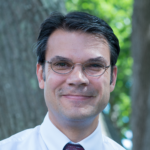
Dr. Charles Tilburg, MS, PhD
Director of the School of Marine & Environmental Programs and Doherty Chair of Marine Sciences Research at the University of New England

Dr. Cameron Wake, PhD
Director of the University of New England’s Center for North Atlantic Studies (UNE North), Adjunct Faculty

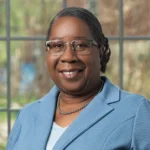
Carol Ewan Whyte, MSc, MPhil, PhD, CPCC
Program Director, Associate Teaching Professor












Frequently Asked Questions
In a survey of UNE Online students and alumni, students across programs reported spending an average of 15-19 hours per week on coursework. It is recommended that students log in to their course multiple times per week.
No, you do not need a bachelor’s in environmental or marine science to apply.
You may begin the application process prior to completing your undergraduate degree, however you must receive a conferred bachelor’s degree from a regionally accredited institution prior to the start date of your choice.
Upon acceptance, students may apply to transfer up to three, 3-credit courses (maximum nine semester credits) into the program. Transfer credit requests will be reviewed by the admissions committee for approval.
The average completion time for the Master of Science in Climate Change Leadership program typically takes 5 semesters to complete. Some students may complete the program sooner, depending on overload or transfer credits.
The Master of Science in Climate Change Leadership program is designed for students who hold a bachelor’s degree and are passionate about building impactful careers in addressing climate change. It is ideal for those coming from related fields such as environmental studies, marine science, public health, or business, but also welcomes individuals from unrelated disciplines, as no specific prerequisites are required.
The first core course includes real-time online meetings. After that, the courses are asynchronous, meaning you choose when to log in and complete your coursework (while adhering to all posted deadlines and due dates, of course). In the event there is a live session, the instructor will make the video available for viewing at any time.
The tuition for the CCL program is $21,300.
Yes, financial aid may be available. UNE Online encourages students seeking financial assistance to complete the Free Application for Federal Student Aid (FAFSA). Many students qualify for Direct Subsidized and/or Direct Unsubsidized loans. For more information about financing options, contact Student Financial Services to discuss what may be available to you.
At the University of New England Online, we are committed to providing our students with the highest level of academic and personal support. Our online climate change master’s program was created with the working professional in mind. We understand the unique challenges of adult students who are often juggling school, career, and family, which is why we offer a robust Student Academic Success Center (SASC) and high-touch academic advising. Learn more about Student Support and Resources.